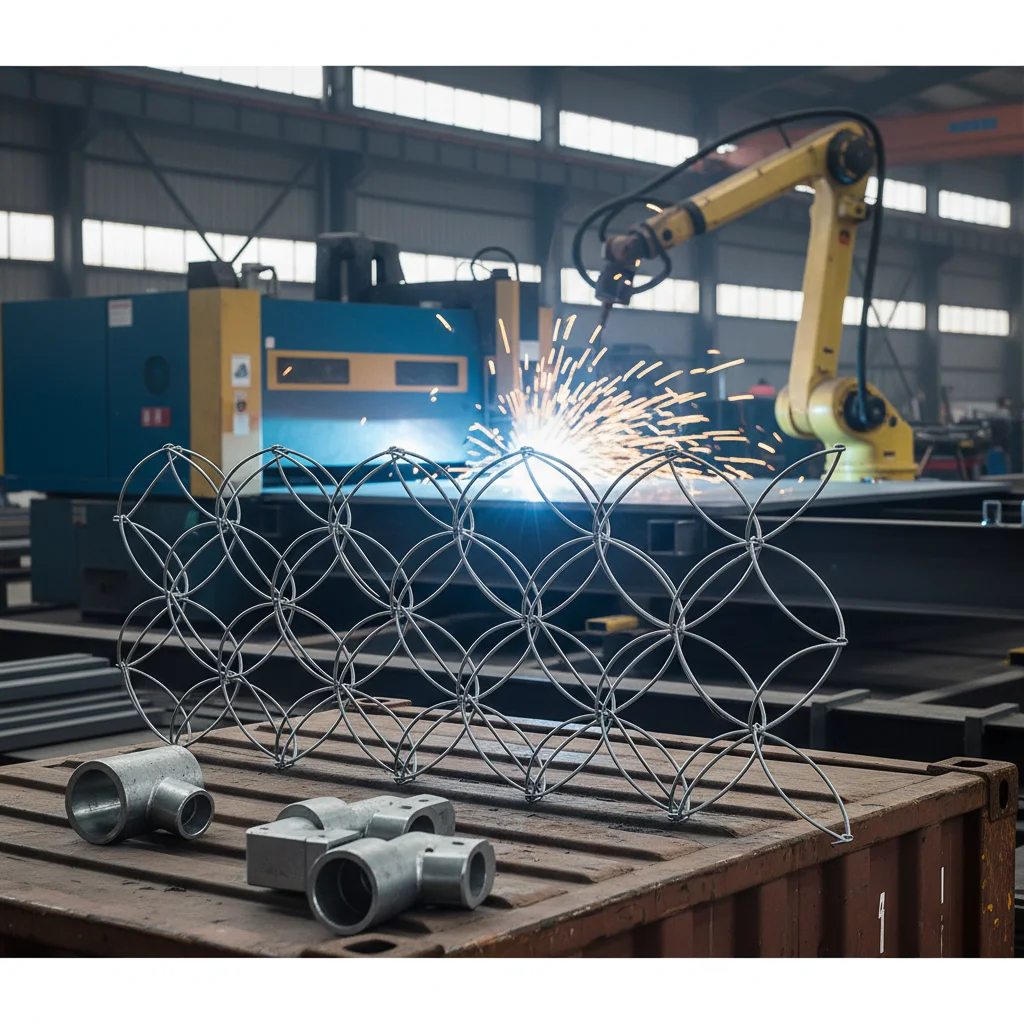
The integration of high-performance materials in equine facility design has revolutionized how we approach animal welfare and infrastructure longevity. Among these innovations, the application of stainless steel diamond wire mesh concepts—specifically within non-climb welded systems—ensures that powerful animals are contained without the risk of injury. By prioritizing smooth finishes and structural rigidity, these systems provide a professional-grade boundary that balances visibility with extreme security.
Globally, the demand for specialized equine fencing is driven by a shift toward "injury-prevention" architecture. Traditional wooden rails, while aesthetic, often suffer from splintering and rot, creating hazards for horses. The adoption of corrosion-resistant alloys and precise mesh apertures allows stable owners to create environments that reduce animal stress and minimize the frequency of veterinary emergencies related to fence-trapping.
Understanding the technical specifications of these systems is crucial for anyone managing a boarding stable or a private paddock. From the choice of hot-dip galvanization to the implementation of internal bolt fixings, every detail is engineered to withstand the lateral pressure of a galloping horse. This guide explores the synergy between industrial strength and animal safety, highlighting why modern metal mesh solutions are the gold standard for equine management.

Global Relevance of Stainless Steel Diamond Wire Mesh Principles
In the global livestock and equine industry, the move toward stainless steel diamond wire mesh and high-tensile welded designs is more than a trend; it is a response to stringent ISO safety standards. Across Europe and North America, facilities are replacing traditional boundaries with non-corrosive, small-aperture mesh to eliminate "hoof-trapping," a leading cause of leg fractures in horses.
The industrial shift focuses on the balance between visibility and strength. By utilizing heavy-duty galvanized steel and powder-coated finishes, these systems provide a permanent solution that reduces the carbon footprint associated with the constant replacement of treated lumber, aligning with global sustainability goals.
Defining Non-Climb Systems and Material Science
When we discuss the principles of stainless steel diamond wire mesh in an equine context, we are referring to "Non-Climb" mesh. This is characterized by small apertures (typically 2"x4" or 2"x3") that are too small for a horse's hoof to enter but strong enough to withstand an impact from a 1,000lb animal. The geometric stability of the diamond or rectangular weld ensures that the fence does not sag over time.
Material science plays a pivotal role here. Hot-Dip Galvanized Steel remains the gold standard, creating a chemical bond of zinc that protects the core steel from moisture and ammonia—common in barn environments. For those seeking an extra layer of protection, powder-coating adds a non-toxic, colored shield that enhances aesthetics while increasing abrasion resistance.
Furthermore, the introduction of high-impact polymers (PVC/Vinyl) as sleeves for rail systems eliminates the risk of splinters. This multi-material approach ensures that the containment system is not just a wall, but a safety device designed to minimize the physical risks associated with powerful, unpredictable animals.
Core Components of High-Security Equine Fencing
The structural integrity of a system utilizing stainless steel diamond wire mesh logic depends on several critical components. First are the Panel Types: Solid Kickboard Panels (4-5 ft high) are essential for arenas to prevent horses from kicking through the boundary, while Rail Panels provide the necessary visibility for the horse to recognize the perimeter.
Safety features are integrated into the very fabric of the hardware. All fasteners are positioned as internal bolt fixings on the exterior of the stall, ensuring that no sharp edges or protruding bolts are accessible to the horse. Additionally, the use of smooth, rounded tubing with a minimum 2" diameter prevents the "pinch points" common in lower-quality fencing.
Finally, the access points—sliding and swing-out doors—must match the strength of the mesh. Heavy-duty continuous hinges and secure slam-latches ensure that doors do not swing open accidentally, while pasture gates are designed with matching single or double widths to allow for safe vehicle and animal movement.
Performance Metrics of Mesh Safety Standards
Evaluating the effectiveness of stainless steel diamond wire mesh applications requires looking at specific performance metrics: impact resistance, corrosion rates, and hoof-safety ratings. Unlike traditional wire, non-climb mesh is tested for its ability to maintain aperture size under extreme lateral pressure, ensuring the "non-climb" promise remains true for decades.
From a maintenance perspective, these systems outscore traditional wood significantly. While the initial capital expenditure is higher, the "cost per year of service" is lower due to the absence of annual painting or rot-treatment requirements. This makes them the most logically sound investment for professional breeding farms and training facilities.
Comparative Safety & Durability Ratings for Equine Mesh
Real-World Applications in Professional Stables
The practical application of these mesh systems extends across various equine zones. In paddocks and turnout areas, non-climb mesh serves as the primary perimeter, ensuring that curious horses cannot get their legs caught in wide gaps. For riding arenas and round pens, the combination of solid kickboards and rail systems provides a visible, safe boundary that protects both the horse and the rider during high-intensity training.
Inside the barn, modular stall panels create highly ventilated and hygienic environments. By using vertical bar/grille panels, stable managers can ensure maximum airflow, which is critical for respiratory health in horses. Additionally, breeding farms utilize extra-secure, smooth-walled panels specifically for foaling stalls, where the safety of both the mare and the newborn foal is the absolute priority.
Long-Term Value and Sustainability Analysis
Investing in a system based on stainless steel diamond wire mesh principles is an exercise in long-term risk management. The most tangible benefit is the prevention of vet bills; a single trapped limb incident can cost thousands of dollars in medical expenses and potentially result in the loss of a high-value animal.
From a property value perspective, a professionally installed metal fencing system increases the appraisal value of a horse facility. Buyers recognize the durability and low-maintenance nature of these materials, viewing them as a permanent asset rather than a recurring expense.
Sustainability is also a key factor. Unlike treated wood, which leaches chemicals into the soil and requires frequent replacement, hot-dip galvanized and powder-coated steel are fully recyclable and possess a lifespan that can span several decades. This reduces the overall environmental impact of the facility's infrastructure.
Future Innovations in Equine Containment Technology
Looking ahead, the evolution of stainless steel diamond wire mesh is moving toward "smart" integration and advanced coatings. We are seeing the emergence of antimicrobial powder coatings that help reduce the spread of pathogens in high-density stall environments, promoting a healthier barn ecosystem.
Automation is also playing a role, with the development of precision-cut, custom-fit panels designed via 3D terrain mapping. This ensures that fences follow the natural contour of the land perfectly, eliminating gaps and weak points that often occur with standard-sized panels in irregular terrains.
Moreover, the industry is exploring high-strength, lightweight alloys that maintain the rigidity of steel but are easier to transport and install in remote pasture areas. This will make high-security non-climb fencing more accessible to smaller private owners who previously relied on less safe, traditional materials.
Comparative Analysis of Equine Fencing Material Performance
|
Material Type
|
Hoof Safety Rating
|
Maintenance Level
|
Expected Lifespan
|
|
Non-Climb Welded Mesh
|
Excellent (10/10)
|
Very Low
|
25+ Years
|
|
Galvanized Steel Rail
|
Good (8/10)
|
Low
|
20+ Years
|
|
PVC Coated Steel
|
Excellent (9/10)
|
Minimal
|
20 Years
|
|
Treated Pine Wood
|
Moderate (5/10)
|
High
|
7-12 Years
|
|
Aluminum Alloy
|
Good (7/10)
|
Very Low
|
30+ Years
|
|
High-Tensile Wire
|
Poor (3/10)
|
Moderate
|
15 Years
|
FAQS
Non-climb mesh, utilizing principles similar to stainless steel diamond wire mesh, features much smaller apertures (usually 2"x4"). This prevents horses from getting their hooves caught in the fence, which is a frequent occurrence with traditional livestock wire. Additionally, the welded structure prevents the wires from shifting, eliminating the risk of the animal becoming entangled during a panic or impact.
Yes, hot-dip galvanizing creates a stable, non-toxic zinc-iron alloy coating. Unlike some pressure-treated woods that contain arsenic or other harsh chemicals, galvanized steel is inert. While cribbing or chewing is generally discouraged for dental health, galvanized steel does not splinter or rot, making it far safer than wood if a horse does engage with the fence.
Hot-dip galvanizing is the gold standard for raw strength and maximum corrosion resistance, especially in salty or highly humid environments. Powder-coating is ideal if you want a specific aesthetic (black, brown, or green) and an additional layer of protection against surface scratches. Many high-end facilities use a "dual-layer" approach—galvanized steel that is then powder-coated for the ultimate combination of longevity and style.
Absolutely. While standard panels are available, we specialize in custom-cut panels to fit odd-sized stalls or undulating landscapes. The key is professional installation where posts are concreted deep enough to withstand lateral pressure, and panels are aligned to ensure no gaps are left at the bottom, which is critical for maintaining the non-climb safety standard.
For most horses, 5 feet (1.5m) is the standard. However, for stallions, jumpers, or horses known to test boundaries, we strongly recommend 6 feet (1.8m). Combined with a non-climb mesh base, this height prevents the animal from attempting to jump or lean over the fence, significantly increasing the security of the containment.
These systems are virtually maintenance-free compared to wood. You do not need to paint or stain them. We recommend a simple routine check twice a year to ensure no fasteners have loosened due to animal impact and that the ground hasn't shifted. Cleaning is as simple as using water and a mild detergent, as the non-porous surface resists bacterial growth and staining.
Conclusion
The transition from traditional wooden boundaries to high-performance systems based on stainless steel diamond wire mesh and non-climb welded technology represents a critical evolution in equine care. By focusing on the scientific reduction of injury risks—through precise aperture sizing, non-toxic materials, and the elimination of protruding hardware—stable owners can create a sanctuary that is both secure and sustainable. The long-term value, measured in reduced veterinary costs and increased property appeal, far outweighs the initial investment.
As we look toward the future, the integration of antimicrobial coatings and 3D-mapped customization will continue to push the boundaries of animal safety. For any professional equine facility, the goal remains the same: to build an environment where the horse's safety is the primary architectural driver. We invite you to upgrade your infrastructure to the modern standard of equine security. Visit our website: www.huawowiremesh.com