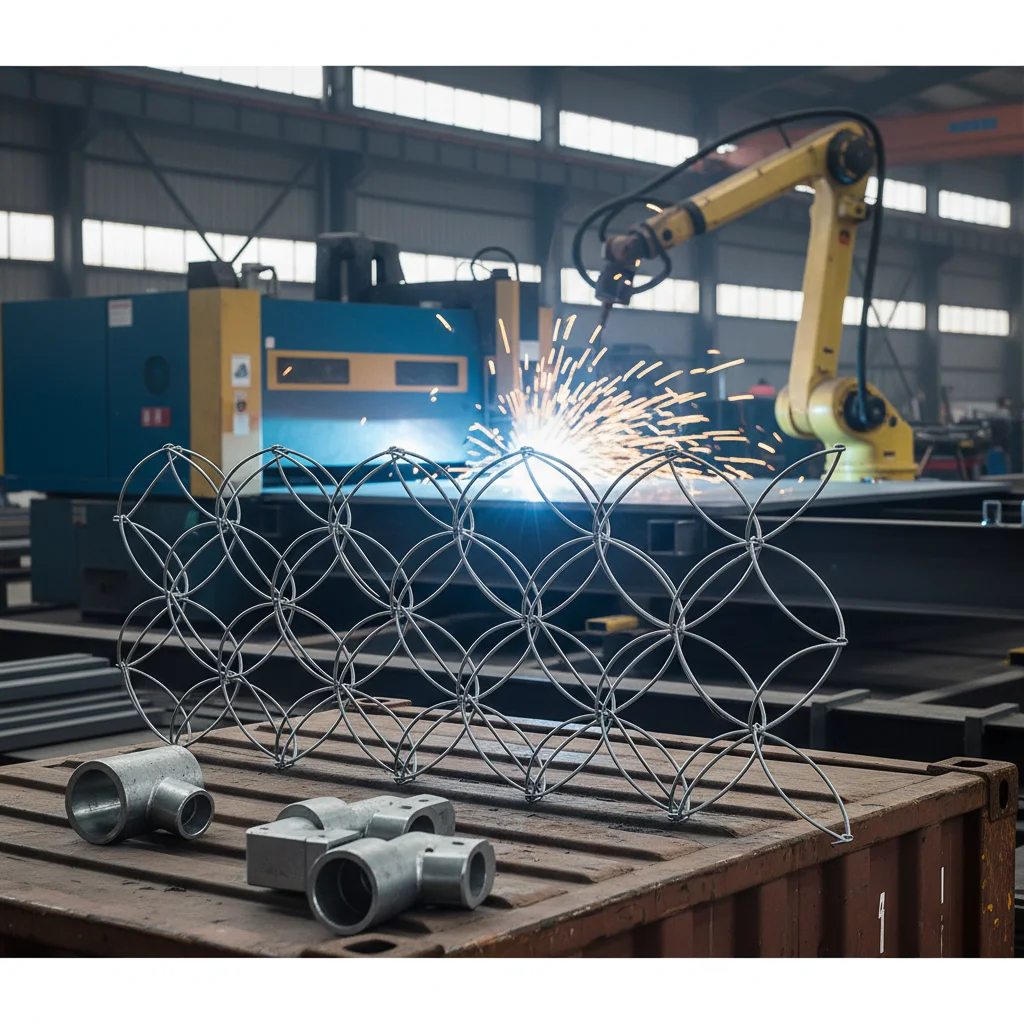
In the evolving landscape of industrial fencing and filtration, stainless steel hexagonal wire mesh stands as a pinnacle of engineering versatility. By combining the geometric stability of the hexagonal weave with the inherent corrosion resistance of premium stainless alloys, this material provides an indispensable solution for environments where traditional galvanized steel fails. Its ability to maintain structural integrity under extreme stress and chemical exposure makes it a global standard for high-performance enclosures.
The global demand for high-durability mesh solutions has surged as industries shift toward sustainable, long-lifecycle materials. From marine infrastructure to advanced agricultural containment, the implementation of stainless steel hexagonal wire mesh addresses the critical challenge of material degradation. By reducing the frequency of replacements and lowering maintenance costs, it offers a strategic advantage to project managers seeking a balance between initial investment and long-term operational efficiency.
Understanding the nuances of this material—ranging from its tensile strength to its adaptability in complex terrains—is essential for maximizing its utility. Whether used for specialized security barriers or architectural accents, the precision of the hexagonal aperture ensures optimal visibility and strength. This article explores the technical depth, global applications, and future innovations of this essential industrial component.

Global Relevance of Stainless Steel Hexagonal Wire Mesh
On a global scale, the adoption of stainless steel hexagonal wire mesh is driven by the need for materials that can withstand the harshest climatic conditions. In accordance with ISO quality standards for corrosion resistance, stainless steel variants—particularly 304 and 316L—provide a chromium oxide passive layer that prevents oxidation. This is critical in coastal regions or chemical processing zones where salinity and acidity rapidly destroy carbon steel.
The strategic importance of this mesh extends beyond simple fencing; it is a component of critical infrastructure. In regions facing extreme weather volatility, the flexibility of the hexagonal weave allows the mesh to absorb impact and distribute stress more evenly than rigid welded grids. This resilience reduces the likelihood of catastrophic failure during environmental stressors, ensuring the safety of personnel and assets worldwide.
Defining Technical Specifications and Structure
At its core, stainless steel hexagonal wire mesh is a woven structure where each wire is twisted and formed into a series of interlocking hexagons. This specific geometry is not merely aesthetic; it is an engineering choice that maximizes the strength-to-weight ratio. Unlike square meshes, the hexagonal pattern allows for greater elasticity and a closer fit to irregular contours, making it ideal for undulating terrains.
The "stainless" aspect refers to the alloying elements—primarily chromium and nickel—which ensure that the mesh remains rust-free without the need for external coatings. While PVC-coated meshes offer a protective jacket, the inherent properties of stainless steel ensure that even if the surface is scratched, the material remains protected from the inside out. This makes it the gold standard for hygienic environments such as food processing plants.
From a manufacturing perspective, the precision of the wire gauge and the consistency of the hexagonal opening are paramount. High-quality mesh is produced using automated weaving looms that maintain tension throughout the process, preventing "sagging" or deformation. This technical rigor ensures that the final product meets the strict load-bearing requirements of industrial security and animal containment.
Core Performance Components of High-Grade Mesh
The first critical component of stainless steel hexagonal wire mesh is its Tensile Strength. The use of high-grade alloys ensures that the mesh can withstand significant pressure without permanent deformation, which is essential for security fencing and structural reinforcement.
Secondly, the Corrosion Resistance factor is unmatched. By utilizing 316L stainless steel, the stainless steel hexagonal wire mesh develops a self-healing oxide layer. This allows it to function in marine settings or chemical laboratories where exposure to chlorides would typically trigger rapid pitting in other metals.
Finally, Dimensional Stability and Flexibility allow this mesh to be deployed across uneven landscapes. The hexagonal structure allows the stainless steel hexagonal wire mesh to bend and conform to the ground while maintaining its aperture size, preventing gaps that could be exploited by intruders or wildlife.
Real-World Global Application Case Studies
In practice, stainless steel hexagonal wire mesh is deployed in some of the most demanding environments on earth. For instance, in remote industrial zones of Southeast Asia, where high humidity and salt spray are constant, stainless mesh is used to protect sensitive equipment from debris and pests without worrying about yearly rust treatments.
Another significant application is found in high-end architectural facades and urban green spaces. Architects utilize the mesh to create "living walls," where the stainless steel provides the necessary support for climbing plants while resisting the moisture from irrigation systems. In these settings, the aesthetic appeal of the silver finish blends seamlessly with modern glass and steel designs.
Performance Comparison of Stainless Steel Hexagonal Wire Mesh Variants
Long-Term Value and Sustainability Analysis
The long-term value of stainless steel hexagonal wire mesh is found in its lifecycle cost analysis. While the initial procurement cost of stainless steel is higher than that of galvanized or PVC-coated options, the "cost per year of service" is significantly lower. Because it does not require repainting, re-coating, or frequent replacement, it reduces the total cost of ownership over a 20-year horizon.
From a sustainability perspective, stainless steel is 100% recyclable. Unlike PVC-coated products, which introduce plastics into the environment and can be difficult to recycle, stainless steel hexagonal wire mesh can be melted down and repurposed without loss of quality. This aligns with global "Green Building" certifications and ESG (Environmental, Social, and Governance) goals for modern corporations.
Future Trends in Mesh Engineering and Automation
The future of stainless steel hexagonal wire mesh is being shaped by advancements in metallurgy and AI-driven manufacturing. We are seeing the emergence of "smart alloys" that can offer even higher strength-to-weight ratios, allowing for thinner wires that provide the same level of security. This reduces the overall weight of the installation, lowering transportation costs and easing the burden on installation crews.
Automation in weaving processes is also increasing precision. Robotic looms can now adjust tension in real-time based on the wire's elasticity, ensuring that the hexagonal cells are mathematically perfect. This precision is critical for filtration applications where a deviation of a few millimeters in the aperture could lead to system failure.
Furthermore, the integration of digital tracking (such as RFID tags embedded in the mesh rolls) allows for better quality control and traceability. This ensures that the specific grade of stainless steel used in stainless steel hexagonal wire mesh can be verified at any point in the supply chain, providing peace of mind for government and military contracts.
Overcoming Implementation Challenges in Field Work
One of the primary challenges when installing stainless steel hexagonal wire mesh is its inherent stiffness compared to soft carbon steel. To overcome this, expert installers use specialized tensioning tools that stretch the mesh to its optimal state without distorting the hexagonal shape. Proper anchoring is also vital; using stainless steel fasteners prevents "galvanic corrosion," which occurs when two dissimilar metals touch.
Another common issue is the handling of large rolls in remote areas. Because stainless steel is denser than aluminum, logistical planning must account for weight. The solution lies in modular deployment, where the mesh is pre-cut into manageable panels and joined on-site using high-strength stainless steel ties, ensuring no weak points are created at the seams.
Finally, specifying the correct grade (304 vs 316L) is a frequent point of confusion. Our expert guidance recommends 316L for any application involving salt water or chemical exposure, as the addition of molybdenum significantly enhances pitting resistance. Choosing the right material at the outset prevents the costly mistake of premature failure in aggressive environments.
Technical Analysis of Stainless Steel Hexagonal Wire Mesh Grade Selection
| Material Grade |
Corrosion Resistance |
Tensile Strength |
Ideal Environment |
| SS 304 Hex Mesh |
High |
Very High |
Indoor/Urban/Dry |
| SS 316L Hex Mesh |
Extreme |
High |
Marine/Chemical |
| Galvanized Hex Mesh |
Medium |
Medium |
Agricultural/Rural |
| PVC Coated Hex Mesh |
High (Surface) |
Medium |
Gardens/Playgrounds |
| SS 430 Hex Mesh |
Moderate |
High |
Low-moisture zones |
| Custom Alloy Hex Mesh |
Specialized |
Extreme |
Aerospace/Lab |
FAQS
The primary difference is the addition of molybdenum in 316L. While 304 is excellent for general use and atmospheric corrosion, 316L is specifically designed to resist pitting and crevice corrosion in chloride-rich environments, such as seawater or chemical processing plants. For most urban projects, 304 is sufficient, but for coastal or industrial zones, 316L is the professional recommendation.
It depends on the application. PVC-coated mesh offers superior aesthetics and a "soft touch," making it ideal for playgrounds. However, stainless steel is inherently more durable and long-lasting. Once a PVC coating is punctured or worn away by UV rays, the core wire can rust. Stainless steel requires no coating and maintains its integrity for decades, offering much higher long-term value.
Preventing sag requires a combination of correct tensioning during installation and the use of appropriate support posts. We recommend using a tensioning bar or a specialized stretching tool to pull the mesh taut before securing it. Additionally, ensuring that the posts are spaced correctly according to the wire gauge will maintain the structural integrity of the hexagonal cells over time.
Yes, it is an ideal choice. The hexagonal structure provides a balance of flexibility and strength, while the stainless steel resists corrosion from animal waste and cleaning chemicals. Because it lacks the sharp edges often found in welded wire, it is safer for animals, and its high tensile strength prevents large animals from breaking through the perimeter.
Extremely. Stainless steel is one of the most recycled materials on the planet. Unlike polymer-coated meshes that contribute to microplastic pollution, stainless steel can be fully recycled without loss of quality. Furthermore, its extreme longevity means fewer resources are spent on replacement and transportation over the life of the project.
The choice depends on the expected load and the level of security required. For light-duty decorative screens, a thinner gauge is sufficient. For security fencing or heavy animal containment, a thicker gauge is necessary to prevent deformation. We recommend consulting with our technical team to balance wire thickness with aperture size to optimize both cost and performance.
Conclusion
In summary, stainless steel hexagonal wire mesh represents the ideal fusion of geometric efficiency and material durability. By offering unmatched corrosion resistance, exceptional tensile strength, and a sustainable lifecycle, it solves the most pressing challenges of modern industrial fencing and filtration. Whether deployed in the salty air of a coastline or the sterile environment of a chemical plant, its reliability ensures that infrastructure remains secure and maintenance-free for decades.
Looking forward, as automation and metallurgical science continue to advance, we can expect this material to become even more efficient and versatile. For project managers and engineers, investing in high-grade stainless mesh is not just a purchase, but a strategic decision to prioritize safety, sustainability, and long-term cost-efficiency. To ensure your project utilizes the highest standard of materials, visit our website: www.huawowiremesh.com.