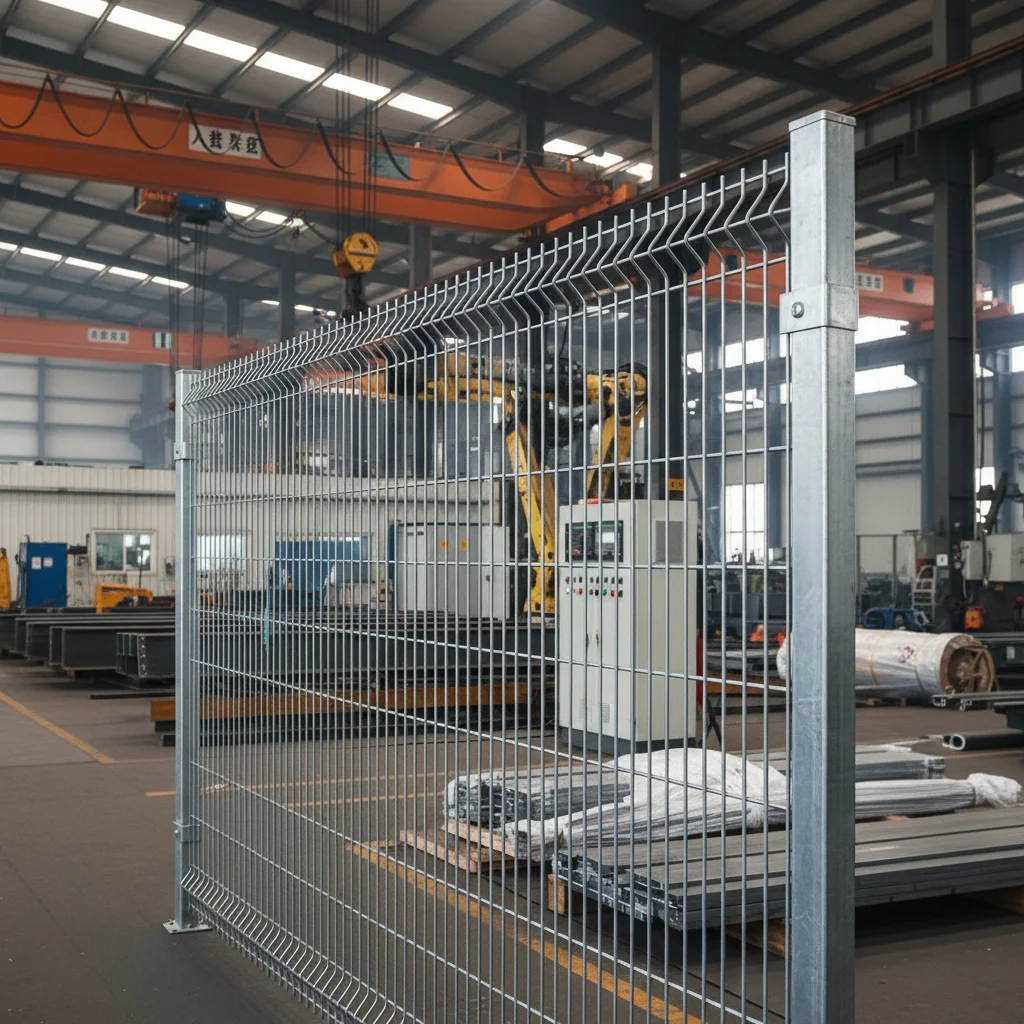
In the demanding world of industrial security and perimeter protection, double loop fencing has emerged as a premier solution for those requiring a balance between high visibility and uncompromising structural integrity. By utilizing a unique double-wire configuration, this fencing system provides enhanced rigidity and a significant deterrent against unauthorized entry, making it a staple in critical infrastructure worldwide.
The global shift toward more sustainable yet durable security materials has pushed the manufacturing of double loop fencing toward advanced galvanization and PVC coating techniques. These innovations ensure that the fencing can withstand extreme environmental stressors, from coastal salt spray to industrial pollutants, while maintaining a professional aesthetic that integrates seamlessly into various architectural landscapes.
Understanding the technical nuances of double loop fencing—from its tensile strength to its installation efficiency—is essential for facility managers and security consultants. Whether applied to airport perimeters, high-security warehouses, or public utilities, selecting the right configuration of double loop fencing ensures long-term asset protection and reduces the lifecycle cost of perimeter maintenance.

Global Market Relevance of Double Loop Fencing
The global demand for high-grade perimeter security has seen a sharp increase as urbanization expands and critical infrastructure becomes more targeted. According to industrial trends aligned with ISO quality standards, the adoption of double loop fencing has grown because it addresses the critical failure points of traditional single-wire mesh, such as sagging and ease of cutting.
In regions experiencing rapid industrial growth, particularly in Asia and North America, double loop fencing is utilized to secure logistics hubs and energy plants. The ability of these systems to provide a clear line of sight for surveillance cameras while maintaining a physical barrier makes them indispensable in the modern security ecosystem.
Defining the Mechanics of Double Loop Fencing
At its core, double loop fencing is a specialized wire mesh system characterized by the use of parallel horizontal wires that are welded together or looped in a way that creates a reinforced structural "rib." Unlike standard chain-link or simple welded wire, the double-wire design significantly increases the panel's resistance to bending and impact, providing a rigid wall that is difficult to breach.
This engineering approach is closely linked to the needs of modern humanitarian and industrial sectors. For instance, in secure enclosures for temporary hospitals or refugee centers, double loop fencing offers a rapid-deployment solution that ensures safety without creating an oppressive, wall-like environment, maintaining airflow and visibility.
From a technical standpoint, the "loop" or double-wire reinforcement acts as a stabilizer. This means that even if one point of the fence is subjected to extreme pressure, the load is distributed across the double-wire structure, preventing the entire section from collapsing—a critical feature for high-traffic industrial zones.
Core Components and Engineering Factors
The durability of double loop fencing begins with the raw material selection. High-tensile steel is typically treated with hot-dip galvanization to prevent oxidation. The thickness of the wire and the precision of the welding points determine how the fence will behave under stress, ensuring that the perimeter remains intact for decades.
Scalability is another key factor. Double loop fencing is designed in modular panels that can be adjusted for height and length depending on the specific vulnerability of the site. This modularity allows for the integration of additional security toppers, such as razor wire or electronic sensors, without compromising the structural integrity of the base panels.
Cost efficiency in double loop fencing is realized through its long lifecycle and low maintenance requirements. By reducing the frequency of repairs and replacements common with lower-grade fencing, organizations can allocate their security budgets toward active monitoring technology rather than passive structural upkeep.
Global Applications and Strategic Use Cases
In real-world contexts, double loop fencing is extensively deployed in airport perimeters where "anti-climb" and "anti-cut" properties are non-negotiable. In these high-stakes environments, the tight aperture of the double loop design prevents intruders from gaining a foothold, while the reinforced wires resist manual cutting tools.
Beyond aviation, this fencing is critical in remote industrial zones, such as mining sites in Australia or oil refineries in the Middle East. In these regions, the fencing must withstand not only human intrusion but also harsh weather and animal impact, proving that the double-wire architecture is as much about environmental resilience as it is about security.
Performance Comparison of Double Loop Fencing Variants
Long-Term Value and Security Advantages
The tangible benefits of investing in double loop fencing extend far beyond simple boundary marking. From a logical perspective, the increased rigidity leads to a significant reduction in "fence failure" incidents, which in turn lowers the insurance premiums for high-value industrial sites. The psychological impact is equally important; the professional appearance of a double-wire system signals a high level of security readiness, deterring opportunistic intruders.
Furthermore, the sustainability of double loop fencing is a key long-term value. Because the materials are primarily steel, they are fully recyclable at the end of their service life. When combined with eco-friendly powder coatings, these systems provide a security solution that aligns with corporate ESG (Environmental, Social, and Governance) goals without sacrificing the safety or dignity of the protected space.
Future Trends in Perimeter Security Innovation
Looking ahead, the evolution of double loop fencing is being driven by the integration of "smart" technologies. We are seeing the rise of sensor-embedded wires that can detect vibrations or cutting attempts in real-time, turning a passive physical barrier into an active digital alarm system. This convergence of metallurgy and IoT (Internet of Things) is transforming how facility managers monitor their perimeters.
Material science is also playing a pivotal role. New alloy coatings are being developed to provide even greater corrosion resistance in extreme saline environments, potentially extending the lifespan of double loop fencing by another decade. The move toward automation in the welding process is also ensuring tighter tolerances and more consistent strength across every single panel.
Sustainability policies are pushing the industry toward "green steel" production, reducing the carbon footprint of the manufacturing process. Future iterations of double loop fencing will likely be produced using renewable energy sources, ensuring that the protection of today's assets does not come at the expense of tomorrow's environment.
Overcoming Implementation Challenges
Despite its advantages, the installation of double loop fencing can present challenges, particularly regarding the weight of the panels. Because of the double-wire construction, these panels are heavier than standard mesh, requiring more robust post-foundations and specialized lifting equipment during the installation phase.
To overcome this, industry experts recommend a precision-engineered mounting system that utilizes heavy-duty brackets and adjustable clamps. This approach not only simplifies the installation process but also ensures that the fence remains perfectly plumb, avoiding the structural weaknesses that occur when panels are forced into place.
Another common limitation is the initial cost compared to basic chain-link options. However, the solution lies in a "Total Cost of Ownership" (TCO) analysis. When factoring in the reduced need for repairs, the increased security rating, and the extended lifespan, double loop fencing emerges as the more economical choice over a 10-to-20-year horizon.
Comparison of Double Loop Fencing Implementation Metrics
| Fence Variant | Installation Complexity | Security Rating (1-10) | Lifespan (Years) |
|---|
| Galvanized Double Loop | Moderate | 8 | 20+ |
| PVC Coated Double Loop | Moderate | 8 | 25+ |
| Stainless Steel Double Loop | High | 10 | 50+ |
| High-Tensile Double Loop | Moderate | 9 | 30+ |
| Standard Single Mesh | Low | 5 | 10-15 |
| Chain Link Standard | Low | 4 | 10-20 |
FAQS
Double loop fencing utilizes a reinforced double-wire structure that significantly increases the panel's rigidity and resistance to impact. While standard welded mesh can be bent or cut more easily, the double loop design distributes force more effectively, making it much harder for intruders to create a gap or breach the perimeter, thus providing a higher security tier.
When treated with hot-dip galvanization or high-quality PVC coating, double loop fencing performs exceptionally well in corrosive environments. The coating acts as a barrier against moisture and salt, while the double-wire structure ensures that even if surface corrosion occurs, the core structural integrity remains intact far longer than thinner, single-wire alternatives.
While the panels are rigid, they can be adapted to uneven terrain using a "stepped" installation method. By adjusting the height of the support posts and using specialized brackets, installers can maintain the security integrity of the double loop fencing while following the contours of the landscape, ensuring there are no gaps at the bottom of the fence.
Yes, double loop fencing is an ideal substrate for electronic security. Because of its stability and rigidity, it can easily support vibration sensors, fiber optic detection cables, or infrared beams. The minimal movement of the double-wire panels reduces the number of false alarms compared to flexible chain-link fences.
Double loop fencing is designed for low maintenance. We typically recommend a visual inspection every 6 to 12 months to check for any physical damage or coating wear. In coastal areas, a quick rinse with fresh water can help remove salt deposits, but generally, no active maintenance is required for the first 10-15 years of service.
Choose hot-dip galvanized if your priority is raw industrial strength and cost-effectiveness in moderate environments. Choose PVC coated if the fence is in a high-corrosion area (near the ocean) or if you require a specific aesthetic color to blend with the environment or match corporate branding, as the PVC layer provides an extra shield of protection.
Conclusion
In summary, double loop fencing represents a sophisticated evolution in perimeter security, combining high-tensile strength, modular flexibility, and long-term environmental resilience. By addressing the inherent weaknesses of traditional fencing through its reinforced double-wire architecture, it provides a reliable barrier that secures critical assets while offering a professional and sustainable aesthetic for industrial and commercial applications.
As we move toward an era of "smart" infrastructure, the integration of digital sensing and green manufacturing will only enhance the value of these systems. For organizations seeking a security solution that minimizes lifecycle costs and maximizes protection, transitioning to double loop fencing is a strategic investment in peace of mind and operational continuity. Visit our website for more details: www.huawowiremesh.com