High Security Double Loop Wire Fence for Perimeter Protection

0%

Table of Contents

In the modern landscape of perimeter security, the double loop wire fence has emerged as a critical solution for high-security environments that demand both visibility and impenetrable strength. By utilizing a specialized looping mechanism, this fencing system provides a structural rigidity that far exceeds standard welded mesh, making it a preferred choice for critical infrastructure globally.

The global demand for specialized metal security solutions is rising as urban centers and industrial zones face increasingly complex security threats. Implementing a double loop wire fence allows facility managers to balance the need for a clear line of sight with the necessity of a physical deterrent that is resistant to cutting and climbing.

Understanding the technical nuances of this fencing system—from its galvanization process to its loop geometry—is essential for anyone looking to secure high-value assets. This guide explores the industrial application, engineering advantages, and long-term value of the double loop wire fence in today's security-conscious world.

double loop wire fence

Global Industry Context of Double Loop Wire Fence

double loop wire fence

On a global scale, the security fencing industry has shifted from simple boundary markers to integrated security systems. The double loop wire fence addresses a critical gap in the market: the need for a fence that is virtually impossible to climb without tools, yet does not obstruct the view of surveillance cameras or security personnel.

According to ISO standards for security barriers, the structural integrity of a fence is measured by its resistance to mechanical impact and cutting. The double loop design significantly enhances these metrics, providing a redundant layer of strength that makes it highly relevant for airport perimeters, military bases, and high-voltage power stations across North America, Europe, and Asia.

Technical Definition and Structural Meaning

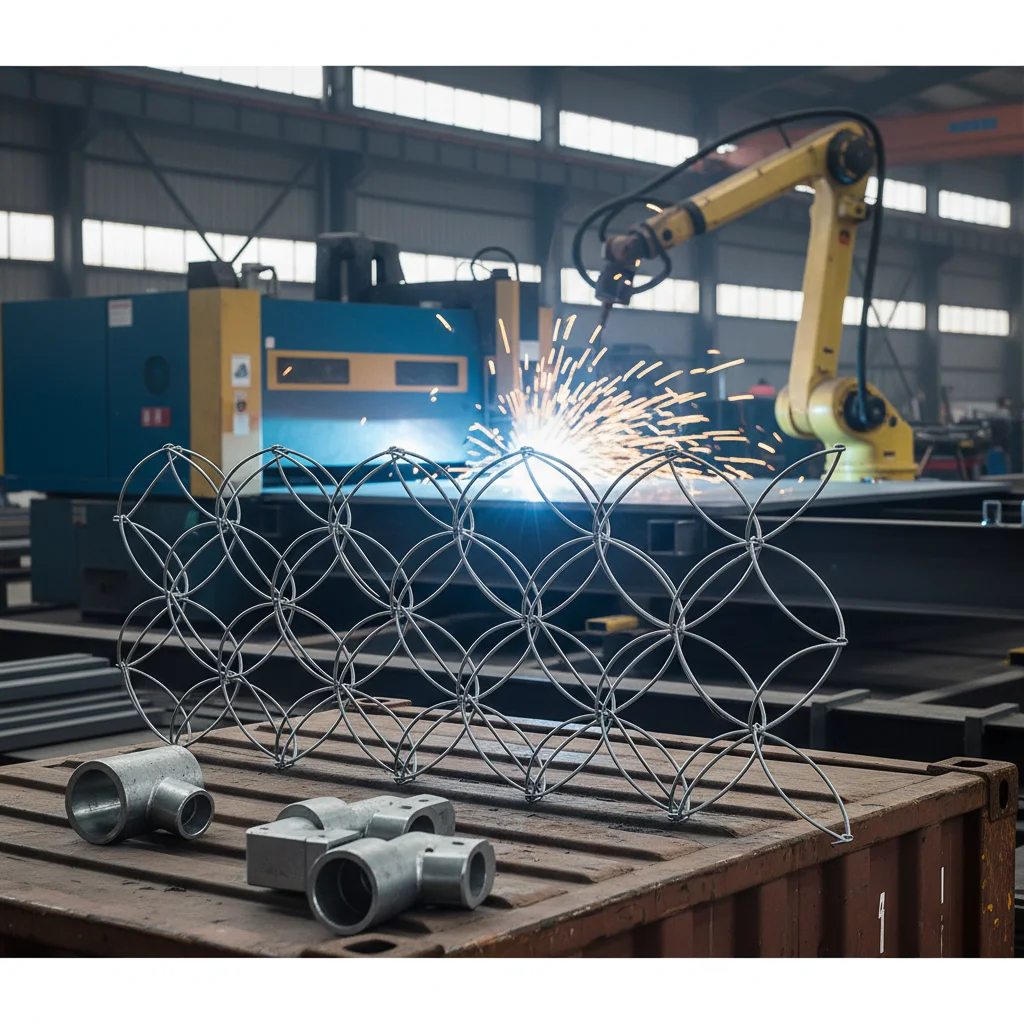
A double loop wire fence is a high-security barrier characterized by its unique horizontal and vertical wire intersections that are looped rather than simply welded at a single point. This geometry creates a reinforced "node" that prevents the wire from snapping or bending under extreme pressure, effectively distributing the force of an impact across multiple points of contact.

In modern industrial terms, this system is more than just a fence; it is a physical security layer designed to delay intruders long enough for response teams to intervene. Its connection to humanitarian and critical infrastructure needs is evident in its use to protect water treatment plants and food storage facilities, where maintaining a sterile and secure perimeter is a matter of public safety.

Unlike traditional chain-link options, the double loop configuration removes the "footholds" that climbers typically use, aligning it with the principles of anti-climb technology seen in 358 mesh systems. This makes it an essential component of the "Defense in Depth" security strategy used by government agencies worldwide.

Core Components for Maximum Durability

The longevity of a double loop wire fence depends heavily on its metallurgical composition. High-tensile steel is typically used to ensure that the fence maintains its shape even when subjected to heavy winds or attempted breaches, providing a level of scalability for large-scale industrial projects.

Corrosion resistance is the second pillar of durability. Most high-end double loop wire fence systems utilize hot-dip galvanization or PVC coating. This chemical barrier protects the underlying steel from oxidation, ensuring that the fence remains structural and aesthetically pleasing for decades, even in salty coastal environments.

Finally, the precision of the loop welding process is what defines the quality of the product. When the loops are formed with exact tolerances, the double loop wire fence achieves its maximum rigidity, preventing "sagging" over long spans and reducing the need for frequent maintenance intervals.

Performance Metrics and Efficiency Analysis

When evaluating the efficiency of a double loop wire fence, engineers look at the ratio of weight to strength. Because the double loop design provides superior stability, it often requires fewer support posts than traditional fences, which leads to a reduction in both material costs and installation time.

Furthermore, the cost-efficiency of this system is realized over its lifecycle. While the initial investment might be higher than basic wire mesh, the decrease in repair costs and the increase in security reliability provide a much higher return on investment (ROI) for facility owners.

Security Performance Rating of Double Loop Wire Fence Variants

Global Applications and Use Cases

The versatility of the double loop wire fence makes it suitable for a wide range of real-world contexts. In remote industrial zones, such as mining sites in Australia or oil fields in the Middle East, these fences provide a robust barrier against wildlife and unauthorized personnel in areas where manual patrolling is limited.

In urban settings, the system is frequently employed for the protection of critical infrastructure like electrical substations and railway corridors. In these environments, the double loop wire fence ensures that the perimeter is secure without creating a visual "wall" that could clash with city planning or hinder emergency services' ability to monitor the interior.

Long-Term Value and Security Advantages

The long-term value of investing in a double loop wire fence lies in its ability to provide peace of mind through consistent reliability. Beyond the logical benefits of strength and cost, there is an emotional component: the trust that employees and assets are safe. This reliability fosters a sense of stability in high-risk operational environments.

Sustainability is another key advantage. Because the double loop wire fence is constructed from recyclable steel and requires minimal chemical maintenance over its lifespan, it aligns with modern corporate ESG (Environmental, Social, and Governance) goals.

Furthermore, the system's innovation in design reduces the likelihood of catastrophic failure. While a single-wire weld can be compromised by a single point of failure, the double loop architecture ensures that the fence remains intact even if one part of the mesh is damaged, maintaining the overall integrity of the security perimeter.

Future Trends in Security Fencing Innovation

As we move toward the era of "Smart Cities," the double loop wire fence is being integrated with digital transformation tools. We are seeing the rise of "intelligent fencing" where fiber optic sensors are woven into the double loop structure, allowing the fence to detect vibrations and alert security teams to the exact location of an attempted breach in real-time.

Material science is also evolving, with the introduction of nano-coatings that make the double loop wire fence completely immune to salt-spray and acid rain. These advancements ensure that the physical barrier remains an effective deterrent for a century rather than a few decades.

The trend toward automation is also impacting installation. New modular clipping systems for the double loop wire fence are reducing manual labor requirements, allowing for rapid deployment in emergency scenarios or fast-tracked industrial expansions.

Analysis of Double Loop Wire Fence Innovation and Material Performance

Material Type Anti-Climb Score (1-10) Corrosion Resistance Expected Lifespan
Galvanized Steel 8 High 20-30 Years
PVC Coated Steel 8 Very High 25-35 Years
Stainless Steel 9 Extreme 50+ Years
High-Tensile Alloy 10 Medium-High 30-40 Years
Composite Coated 7 High 20-25 Years
Electro-Galvanized 6 Moderate 10-15 Years

FAQS

What makes a double loop wire fence superior to standard welded mesh?

The primary advantage is the loop geometry at the intersections. While standard welded mesh relies on a single point of contact, the double loop creates a reinforced knot that is significantly harder to cut or deform. This structural redundancy prevents the "domino effect" where one broken wire leads to a large hole in the fence, making it far more effective for high-security perimeters.

How long does a double loop wire fence typically last in coastal areas?

In coastal environments, lifespan depends on the coating. A hot-dip galvanized double loop wire fence typically lasts 20-30 years, but for maximum longevity, we recommend PVC coating or stainless steel, which can extend the service life to 35-50 years by providing a complete seal against saline moisture and oxidation.

Is the double loop wire fence difficult to install?

Actually, it is often more efficient to install than traditional fences. Due to its inherent rigidity, it requires fewer support posts and less tensioning hardware to stay upright. Many modern systems use modular panels that can be quickly bolted to posts, significantly reducing the man-hours required for large-scale deployments.

Can double loop wire fences be integrated with alarm systems?

Yes, they are ideal for integration. The stable structure of the double loop wire fence provides an excellent substrate for mounting vibration sensors, fiber optic cables, or infrared beams. Because the fence doesn't sag or sway excessively, it reduces the number of false alarms triggered by wind, ensuring a more accurate security response.

Does the loop design affect the visibility of the perimeter?

Not significantly. While the loops add thickness to the wire intersections, they maintain the open-mesh characteristic of the fence. This ensures that security guards and CCTV cameras have a clear, unobstructed view of the area beyond the fence, which is a critical requirement for "detect and deter" security strategies.

How do I choose between galvanized and PVC coated options?

Choose galvanized if you are operating in a dry, inland climate where cost-efficiency is the primary driver. Choose PVC coated if the fence will be exposed to high humidity, chemical pollutants, or if you require a specific color to blend in with the environment. PVC provides an extra layer of protection that prevents the steel from ever contacting the elements.

Conclusion

The double loop wire fence represents the perfect intersection of metallurgical engineering and strategic security design. By enhancing the structural integrity of every intersection, this system provides a formidable barrier that resists climbing and cutting while remaining cost-effective over its long lifecycle. From critical industrial zones to urban infrastructure, its ability to combine visibility with impenetrable strength makes it an indispensable tool for modern security management.

As we look toward the future, the integration of smart sensors and advanced nano-materials will only further solidify the role of the double loop wire fence in global security. For organizations seeking a balance of durability, sustainability, and high-level deterrence, transitioning to a double-loop system is a prudent investment in long-term safety. Visit our website for professional guidance: www.huawowiremesh.com

Kevin Wilson

Kevin Wilson

Kevin Wilson is a Technical Support Specialist at Huawuo, providing expert assistance to clients regarding product selection, installation, and maintenance. Joining Huawuo in 2019, Kevin excels at translating complex technical information into easily understandable solutions. He’s a key resource for our international customer base, offering guidance on complying with local
Previous Premium Security Galvanized BRC Fencing Solutions
Next High Security Double Wire Mesh Fence for Perimeter Protection

If you are interested in our products, you can choose to leave your information here, and we will be in touch with you shortly.